The Short Answer (That Most People Get Wrong)
Here's what most people think: "I need a speaker. Maybe two. How hard can it be?"
And then the night of the event hits. The music is playing, but it sounds like it's coming from a phone inside a backpack. Half the room can't hear the toasts. The dance floor is dead — not because the DJ is bad, but because the bass can't reach past the first three rows. People are shouting over the music instead of dancing to it.
The problem wasn't volume. It was coverage.
A speaker's job isn't just to be loud. It's to fill a space evenly — so every guest hears the same quality, whether they're front and center or sitting at the table by the bathroom.
The Guest Count Breakdown: What Actually Works
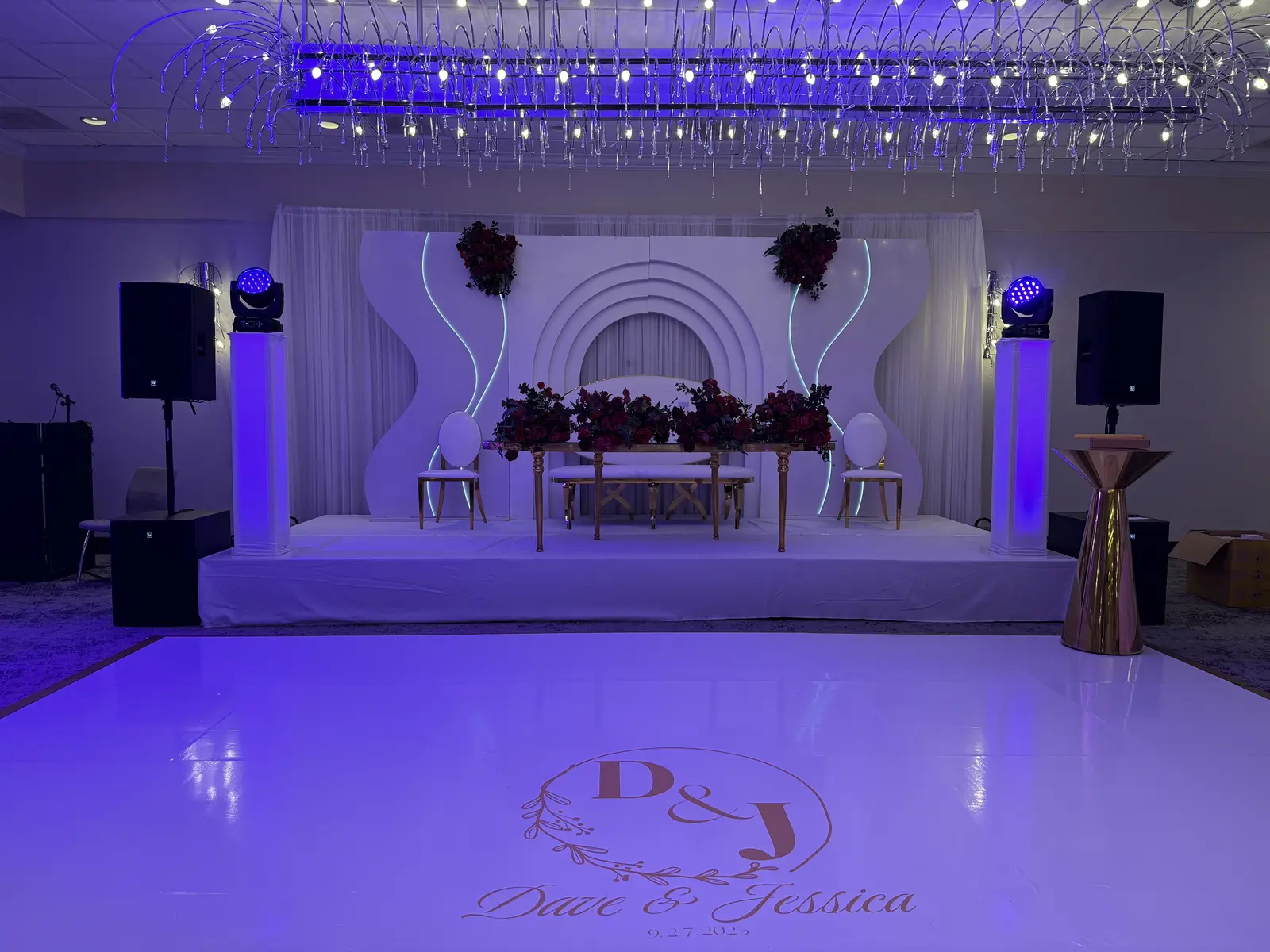
After 200+ events across Minnesota — from 20-person backyard dinners to 300-guest wedding receptions — here's what we've learned works. Not in theory. In practice. On real dance floors, in real venues, with real people.
Up to 40 Guests — Small & Intimate
What you need:2 powered speakers (12") + 2 wireless microphones + mixer
Why it works:Two 12" speakers (like JBL EON 712 or EV ZLX) placed on stands at head height give you clean, even coverage for a smaller room or outdoor area. You don't need subwoofers here — the built-in low-end handles background music and speeches just fine.
What it won't do:If you're planning serious dancing with bass-heavy music, 12" tops alone will sound thin once the energy picks up. Fine for dinner. Not enough for a real party.
Typical cost: From $400 with delivery and setup.
50–120 Guests — The Sweet Spot
What you need:2 powered speakers (15") + 2 powered subwoofers (18") + 2 wireless mics + mixer
Why it works:This is the most common wedding setup in Minnesota, and for good reason. The 15" tops handle mids and highs with clarity, while the 18" subs deliver that low-end punch that gets bodies moving. You physically feel the kick drum. Your chest vibrates on the bass drops. That's when people stop sitting and start dancing.
About 70% of our events fall into this range. It's the setup that handles everything — cocktail hour background music, ceremony if it's in the same room, dinner speeches, and a packed dance floor at midnight. If you're unsure, this is the safe bet.
Typical cost: From $570–$670 depending on speaker model.
150–300+ Guests — Go Big or They Won't Hear You
What you need: 4+ speakers + 2–4 subwoofers + 4 wireless mics + professional mixer
Why it works:Once you cross 150 guests, you're not just filling a room — you're filling a space. Large banquet halls, outdoor tents, hotel ballrooms — these eat sound for breakfast. Two speakers on stands won't cut it. You need multiple source points to avoid dead zones, and enough sub power to maintain bass energy across the entire floor.
What most people don't realize:In a 300-person room, the guests at the back are 60–80 feet from the speakers. Sound drops by 6 dB every time you double the distance. So if it's 100 dB at the dance floor, it's only 88 dB at the back. That's the difference between "this song slaps" and "can you turn it up?"
Typical cost: From $750–$1,500+ depending on scale.
It's Not Just About Guest Count — The Room Matters More Than the Headcount
Here's where most guides stop. Guest count table, done, see you later. But if that's all you look at, you'll still mess it up.
Because the room matters more than the headcount.
Indoor vs Outdoor
Outdoor events lose high frequencies to the wind and low frequencies to the open air. There are no walls to bounce sound back. You need more power outdoors — usually 30–40% more than the same guest count indoors.
A setup that rocks 100 guests in a ballroom will sound underwhelming for 80 guests on a lawn. Every experienced sound tech knows this. The ones who don't are the ones whose clients call us the following year.
Ceiling Height
Low ceiling (8–10 ft): Sound bounces fast, builds up, can get muddy. You need careful EQ and sometimes less volume than you think.
High ceiling (20+ ft): Sound disappears upward. Vocals lose presence. You need more mid-range projection and possibly delay speakers for the back.
Room Material
Hardwood floors and glass walls? Expect reflections, echo, harshness. Carpet, curtains, soft seating? The room absorbs sound — you lose energy and need to push harder.
We tune every system on-site for the specific room. Same speakers, same mixer — but the EQ is completely different in a barn versus a hotel ballroom. That's the part you can't solve by reading specs online.
The Subwoofer Question: Do I Really Need Bass?
Short answer: if anyone is dancing — yes.
Long answer: subwoofers aren't about being loud. They're about being felt. Bass frequencies (30–80 Hz) don't just hit your ears — they hit your chest, your legs, your whole body. That's what pulls tired people out of their chairs at 11 PM.
We've done events where the client said "we don't need subs, it's just background music." Fine. Then the speeches end, the lights drop, the playlist shifts — and suddenly everyone wants to dance. But without subs, the music sounds flat. Thin. Like watching a movie with the bass turned off. You hear it, but you don't feel it.
If there's any chance of dancing at your event — rent the subs. You'll thank yourself at midnight.
Common Mistakes We See (And How to Avoid Them)
Mistake #1: "One speaker is enough."
It's never enough. Even for 20 guests. One speaker creates a hot spot — great sound in one direction, nothing on the sides. Two speakers, properly angled, fill the space evenly.
Mistake #2: "I'll just use my Bluetooth speaker."
We love JBL Flips and Bose SoundLinks for the beach. But for 80 guests in a venue? A consumer Bluetooth speaker at max volume sounds like a tin can screaming. No headroom, no bass, no coverage. Professional speakers exist for a reason.
Mistake #3: "We don't need a technician."
Maybe. If you're comfortable with gain staging, feedback management, wireless frequency coordination, and live EQ adjustments during speeches. If not — $350 for an on-site tech is the best insurance policy you'll ever buy.
Mistake #4: "Bigger speakers = better sound."
Not always. An oversized system in a small room creates standing waves, feedback, and discomfort. The right system is matched to the space, not maxed out for bragging rights.
Quick Reference Table
| Guest Count | Speakers | Subwoofers | Best For |
|---|---|---|---|
| 10–40 | 2x 12" | No | Ceremonies, speeches, dinner music |
| 50–120 | 2x 15" | 2x 18" | Weddings, parties, corporate events |
| 150–200 | 2x 15" or 4x 12" | 2x 18" | Large receptions, galas |
| 200–300+ | 4x 15" | 4x 18" | Concerts, festivals, large productions |
Add an on-site technician ($350) for events with live speeches, multiple microphones, or when you want zero stress.
Still Not Sure? That's Normal.
Every event is different. The venue, the layout, the schedule, the vibe — it all matters. That's why we don't do cookie-cutter packages. We listen to what you're planning, look at your space (photos or a quick call work great), and tell you exactly what you need. No upselling, no guessing.
We've done this for 200+ events across Minnesota. We know which speakers work in which rooms, which subs shake a dance floor without rattling the wine glasses, and which mic setup lets your grandma give the perfect toast without feedback.
Ready to figure out your setup? Tell us about your event and we'll put together a custom quote — usually within an hour.
Get the Right Sound for Your Event
Tell us your guest count, venue, and date — we'll recommend the perfect setup. Free quote, no obligation. We reply within 1 hour.
Get a Free Quote